Draw Your Cart DUEL 1v1 Tips
Read their silhouette, counter the weapon lane, and spend ink with intent.
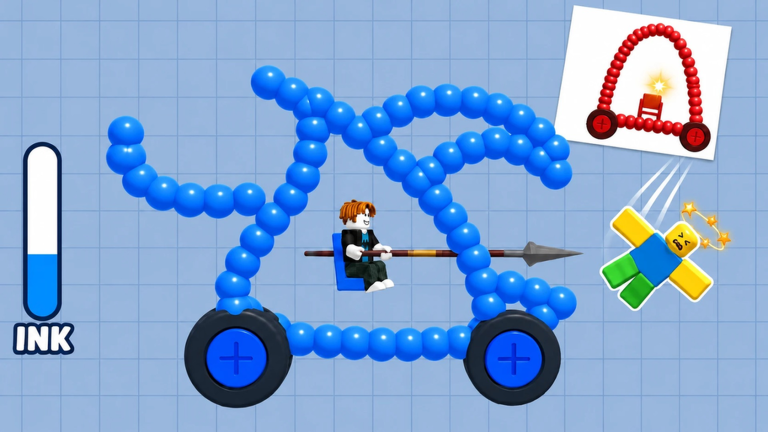
DUEL mode in Draw Your Cart! strips the lobby down to a 1v1. There is nowhere to hide behind third-party chaos. Your ink choices, swipe timing, and ability to read the opponent decide the round. This guide covers duel habits, opponent reading, counter builds, and how to stay aggressive without overdrawing a fragile cart.
If you still disconnect wheels in public fights, stabilize with Getting Started and How to Draw before grinding duels. Duels amplify mistakes; they also teach faster once basics exist.
Why duel feels different
Public sessions can include up to six players and messy pacing. DUEL focuses attention on one enemy cart. That changes priorities:
- Information density rises — you can study one silhouette instead of scanning a crowd.
- Punish windows matter — a missed swipe is not covered by someone else hitting them.
- Mirror matches happen — both players may bring wedges; small joint quality decides it.
- Ego builds fail harder — tall vanity stacks and disconnected spikes get exposed immediately.
Treat each duel as a lab. Win or lose, name the reason in one sentence before you redraw.
Pre-fight reads
Whenever the mode timing lets you see the opponent cart, read for jobs, not art:
- Where is the rider seated? Tall and exposed, or cupped low?
- How many real wheels? Two thick links or four decorative circles?
- What is the primary weapon lane? Front spike, side blade, blunt bumper?
- Where are the thin joints? Hairline axles and floating swords are gift targets.
- Is there rear protection? Open backs invite a circle-around shove toward water or ground.
If you cannot see details in time, assume a forward spike and draw a low counter with a side catcher or angled shield edge. Default plans beat panic scribbles.
Counter builds that work in practice
Counters are adjustments, not entirely new games.
Against long front spikes: Shorten your nose, thicken a side plate, and aim to glance their tip while your bumper hits their wheel link. Do not mirror an even longer spike if your ink cannot support the root.
Against wide blunt pushers: Add a piercing tip that sits higher or offset so you stab the rider zone while their bumper hits empty air. Keep your own wheels reinforced; pushers love shearing axles.
Against armored shells: Stop hitting the thick face. Target wheel joints or shove toward hazards. Shells often spent ink on outline and left mobility weak.
Against mirror wedges: Win the micro battle—thicker rider brace, cleaner wheel links, slightly better aim on the first swipe. Buy ink when coins allow so your mirror is simply denser. See Upgrades.
Against chaos doodles: Play stable. Let them break themselves on your solid frame, then finish with a controlled swipe.
Ink management in 1v1
Duels tempt players to spend the whole bar proving creativity. Resist.
- Lock the three jobs first: rider, wheels, weapon.
- Spend remaining ink on the counter piece you decided during the read.
- Keep joints thicker than the opponent if you are mirroring.
- Leave a tiny reserve while drawing so you can reinforce a weak hub you notice late.
If you upgraded ink recently, do not automatically grow the cart. Grow joint quality. Bigger silhouettes are easier to hit and easier to tip into water.
Aggression without overdraw
Aggression means deciding the contact, not scribbling more spikes.
- First swipe with purpose — enter on your weapon lane immediately.
- Chip then finish — breaking a wheel link often beats hunting a perfect rider poke on try one.
- Reset when mirrored poorly — create space, re-angle, re-enter.
- Use hazards as finishers — a partial break plus a shove into water or ground ends duels cleanly.
Overdraw looks like three weapons, zero braces, and a rider sitting on a hope. Underdraw looks like a timid bump with no tip. Aim for one honest weapon and joints that survive the trade.
Positioning in a pure 1v1
- Control the center enough to choose left or right approach.
- Do not camp the water lip unless you are baiting a shove you can reverse.
- After a piece breaks, change your lane so their remaining weapon faces empty space.
- Protect your rider side; present the reinforced face.
Boss habits help here too. The durability lessons in Boss Fights translate to duels when opponents hit hard. The difference is that duel opponents adapt between rounds, so update your counter each fight.
Mental loop between duels
- What joint failed on my cart?
- What lane did they win?
- What is the smallest change that answers that lane?
- Do I need an ink upgrade before the next set?
CAREER stats reward repeated play. A short duel block each session sharpens aim faster than only playing distracted public queues.
Skins and mind games
Hats, balls, wheels, and flags from Skins can change how loud your cart looks, but they do not replace structure. Do not assume a flashy skin means a strong build, and do not assume your own skins add hidden power unless a patch note says so. Read geometry first.
Sample duel warm-up
- Two rounds with your default wedge, no experiments.
- One round forcing a counter to a long spike.
- One round forcing a counter to a blunt pusher.
- Review coin total and buy ink if a tier is in reach.
- Return to public fights or a boss prep streak via the Guides Hub.
DUEL is where Draw Your Cart players learn honesty. The opponent is a mirror for your ink discipline. Read the silhouette, spend on the counter, swipe first with a real weapon lane, and let hazards finish carts that already cracked. Do that loop and 1v1 stops feeling like a coin flip.
Frequently Asked Questions
Quick answers for Draw Your Cart players.
When should I start playing DUEL?
After you can consistently connect rider, wheels, and weapon in normal fights. Duels punish basics that are still shaky.
What should I look for on the enemy cart?
Rider exposure, real wheel count, primary weapon lane, and thin joints. Counter the lane instead of copying their art.
How do I counter a long spike?
Shorten your nose, reinforce a side edge, and aim to glance their tip while hitting their wheel links or rider brace.
Should I spend all ink to look scarier?
No. Finish structural jobs first. Extra spikes with weak roots lose to one thick weapon and solid wheels.
Do skins help in duels?
Skins are cosmetics. They may change appearance, but win conditions still come from connections, aim, and upgrades.